Tree Removal Near Power Lines in Hawkesbury: Safety & Professional Help
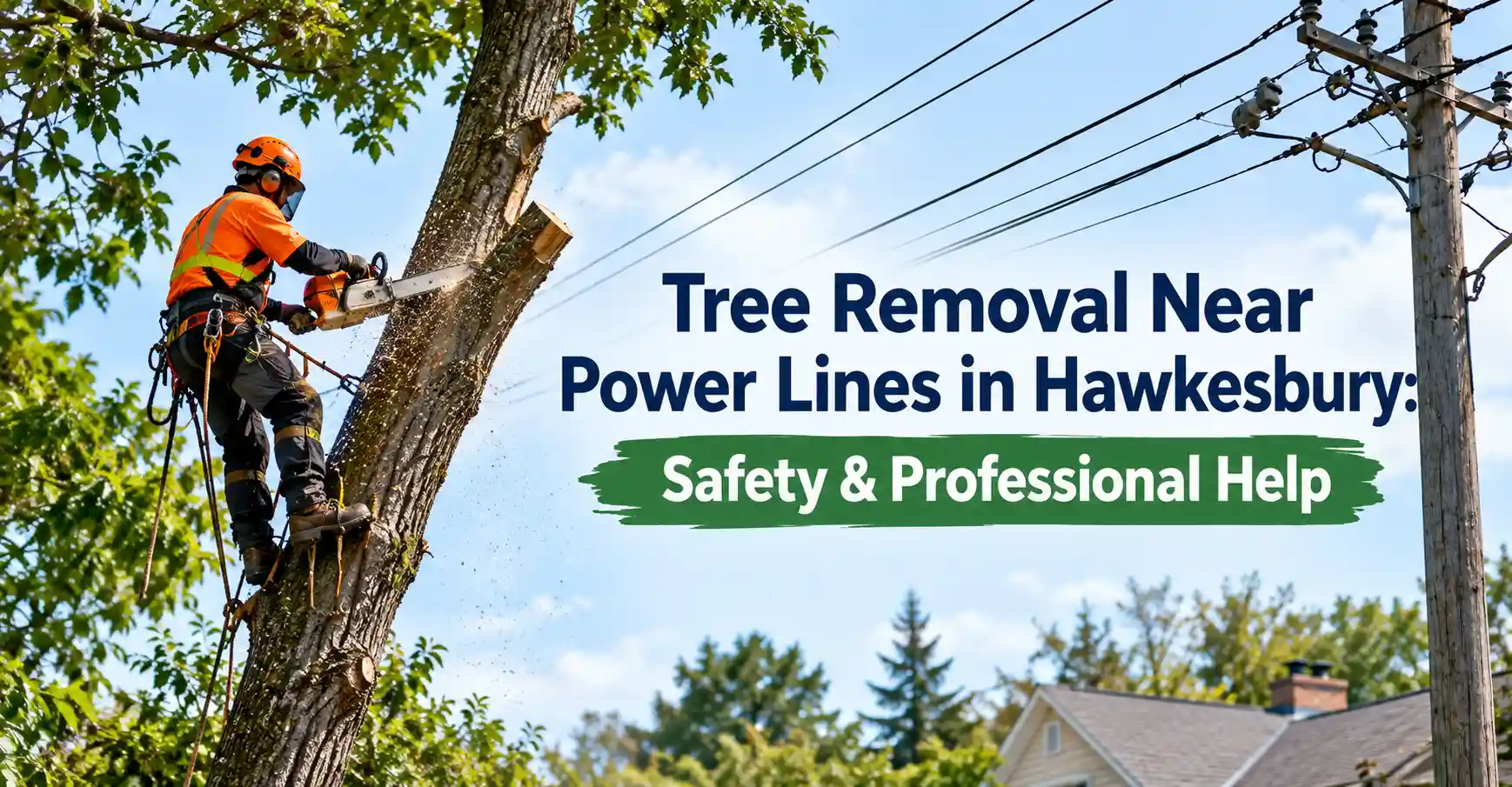
Trees provide shade, privacy, and beauty around homes in Hawkesbury, ON. But when a tree grows too close to overhead power lines, it can become a serious safety concern.
Branches can come into contact with electrical wires, and a damaged or unstable tree may fall toward a power line during strong winds or storms. In these situations, attempting to cut the tree yourself can put you and others at serious risk.
If you have a tree growing close to electrical lines, understanding the risks and getting professional help is important.
Why Are Trees Near Power Lines Dangerous?
Electrical power lines carry enough energy to cause serious injury or death. One of the biggest risks is assuming that a branch or tool has to physically touch a wire before it becomes dangerous.
Electricity can arc through the air to nearby objects, including tree branches and tools. Hydro One specifically warns homeowners never to trim trees near overhead power lines themselves.
A tree near power lines can create several potential problems:
- Electrical shock or electrocution
- Power outages
- Fire hazards
- Falling branches contacting wires
- Trees falling onto utility poles
- Damage to electrical equipment
- Risks to nearby homes and vehicles
For this reason, power-line tree work should be treated differently from normal tree trimming.
Signs a Tree Near Power Lines May Be Dangerous
You should pay particular attention to trees that show visible signs of instability or damage.
1. Branches Are Touching the Wires
Branches that have grown into or around overhead wires should not be cut by homeowners.
Even if the tree looks healthy, its branches can conduct electricity or move into the wires during cutting.
2. The Tree Is Leaning Toward the Power Line
A leaning tree can become especially dangerous if it is positioned toward electrical infrastructure.
Strong winds, heavy snow, ice, or root damage can make the situation worse.
3. Large Dead Branches Are Hanging Over the Lines
Dead branches can break unexpectedly.
If large branches are positioned over power lines, they can fall onto the wires and cause outages or create a dangerous electrical situation.
4. The Tree Has Been Damaged by a Storm
Storms can split trunks, break major limbs, and uproot trees.
A damaged tree near electrical wires should be treated as a potential emergency, especially if it is leaning or has already fallen onto the line.
5. Roots Are Damaged or Exposed
A tree depends on its root system for stability.
Construction, excavation, erosion, or severe weather can damage roots and make a tree more likely to fall.
A weakened tree beside a power line can become a major hazard.
Never Try to Cut a Tree Near Power Lines Yourself
One of the most important safety rules is simple: do not attempt to cut down or trim a tree near power lines yourself.
Hydro One states that homeowners should never trim trees near power lines because electricity can jump through the air, even when a tool or branch does not directly touch the wire.
Common DIY equipment can increase the risk, including:
- Chainsaws
- Ladders
- Pole saws
- Long-handled pruners
- Ropes
- Metal tools
A tree can also move unexpectedly when a branch is cut.
What looks like a simple branch removal can quickly become a dangerous situation.
What Should You Do If a Tree Falls on a Power Line?
If a tree has fallen onto a power line, stay away from the area.
Do not touch the tree, branches, vehicle, fence, or other objects that may be in contact with the line.
Hydro One advises staying at least 10 metres away from fallen power lines and treating them as energized.
If you see a dangerous electrical situation such as a smoking, sparking, or burning tree, contact the appropriate emergency service or utility provider immediately.
Do not attempt to move the tree yourself.
What About Trees Near Private Power Lines?
It is important to understand that not every power line near your property is necessarily owned or maintained by the same utility.
Hydro One explains that property owners can be responsible for vegetation around privately owned lines serving only their home or business. Hydro One recommends hiring a certified utility arborist or qualified electrical contractor for this type of work.
If you are unsure who owns the line, it is better to confirm before arranging tree work.
This can help avoid unnecessary risks and ensure the correct safety procedures are followed.
How Professionals Handle Tree Removal Near Power Lines
Removing a tree close to electrical lines requires careful planning.
A professional tree service will first assess the tree and surrounding area.
Step 1: Inspect the Tree
The tree is examined for:
- Lean
- Dead branches
- Trunk cracks
- Decay
- Root damage
- Structural weakness
- Storm damage
The location of the power lines is also considered.
Step 2: Identify Potential Hazards
Professionals assess everything around the tree, including:
- Power lines
- Utility poles
- Houses
- Garages
- Vehicles
- Fences
- Driveways
- Nearby trees
This helps determine how the tree can be safely managed.
Step 3: Determine Whether Trimming or Removal Is Needed
Not every tree near a power line needs to be completely removed.
A healthy tree may only require appropriate pruning.
However, removal may be considered when the tree is:
- Dead
- Severely damaged
- Structurally unstable
- Diseased
- Leaning dangerously
- Likely to fall toward the electrical line
The safest solution depends on the condition and location of the tree.
Step 4: Use Controlled Removal Techniques
When removal is necessary, a large tree near a house or utility line may need to be taken down in sections rather than allowed to fall in one piece.
Professionals may use climbing equipment, ropes, rigging systems, and specialized machinery depending on the situation.
The objective is to maintain control over the branches and trunk sections throughout the removal process.
How Far Should Trees Be From Power Lines?
There is no single distance that applies to every situation because power-line type, voltage, ownership, tree species, and local requirements can affect safe clearances.
Hydro One's current Conditions of Service, for example, identifies different clearance requirements for secondary and primary lines and recommends qualified professionals for vegetation work around private overhead lines.
Hydro Hawkesbury also provides specific guidance for trees and landscaping near its distribution infrastructure, including requirements around poles and overhead lines.
Because requirements can vary, homeowners should not rely on a general distance when deciding whether it is safe to cut a tree.
Tree Trimming vs Tree Removal Near Power Lines
A tree growing near a power line does not automatically need to be removed.
Tree trimming may be appropriate when:
- The tree is healthy
- Only certain branches are causing concern
- The tree can be safely maintained
- The structure remains stable
Tree removal may be appropriate when:
- The tree is dead
- The trunk has serious decay
- The tree is severely damaged
- Major roots have been compromised
- The tree is leaning dangerously
- The tree cannot be safely maintained near the line
A qualified professional can help determine which option makes sense for your property.
Why Professional Tree Removal Is Safer
Tree removal around electrical infrastructure requires more than standard cutting skills.
Professionals need to understand tree structure, falling patterns, rigging, equipment limitations, and electrical hazards.
For homeowners considering tree removal in Hawkesbury, hiring an experienced and properly qualified tree service is an important safety decision.
Alexandria Tree & Landscape provides professional tree services for homeowners in Hawkesbury and surrounding communities.
The company offers services such as tree removal, tree trimming, arborist services, and stump grinding.
When a tree is located near electrical infrastructure, the situation should be assessed carefully before any work begins.
What Homeowners Should Do Before Tree Work
Before arranging tree work near power lines, homeowners should:
- Identify whether the line is utility-owned or privately owned.
- Avoid touching or cutting branches near electrical wires.
- Keep people and children away from hazardous trees.
- Contact the appropriate utility if the tree is interfering with their lines.
- Hire a qualified professional for tree work that requires specialized safety procedures.
Hydro One provides utility-specific guidance and service options for trees that may be hazardous to its power lines.
Preventing Future Problems
The best time to think about power-line clearance is before a tree becomes a problem.
When planting new trees, consider their mature height and spread.
Avoid planting species that will eventually grow into overhead electrical infrastructure.
Regular tree inspections can also help identify:
- Dead branches
- Weak limbs
- Leaning trees
- Root problems
- Disease
- Structural defects
Early maintenance may prevent a small problem from becoming a major safety concern.
Final Thoughts
Trees and power lines can coexist, but proper safety precautions are essential.
A tree that is leaning toward a power line, has large dead branches, or has been damaged by a storm should not be handled as a DIY project. Electrical hazards can be difficult to see, and electricity can arc through the air to nearby objects.
If you have a tree growing close to power lines in Hawkesbury, the safest approach is to have the situation properly assessed before any cutting or removal begins.
With the right professional help, homeowners can address hazardous trees while protecting their property, family, and surrounding electrical infrastructure.
