Removing a Large Tree Near a House in Hawkesbury, ON
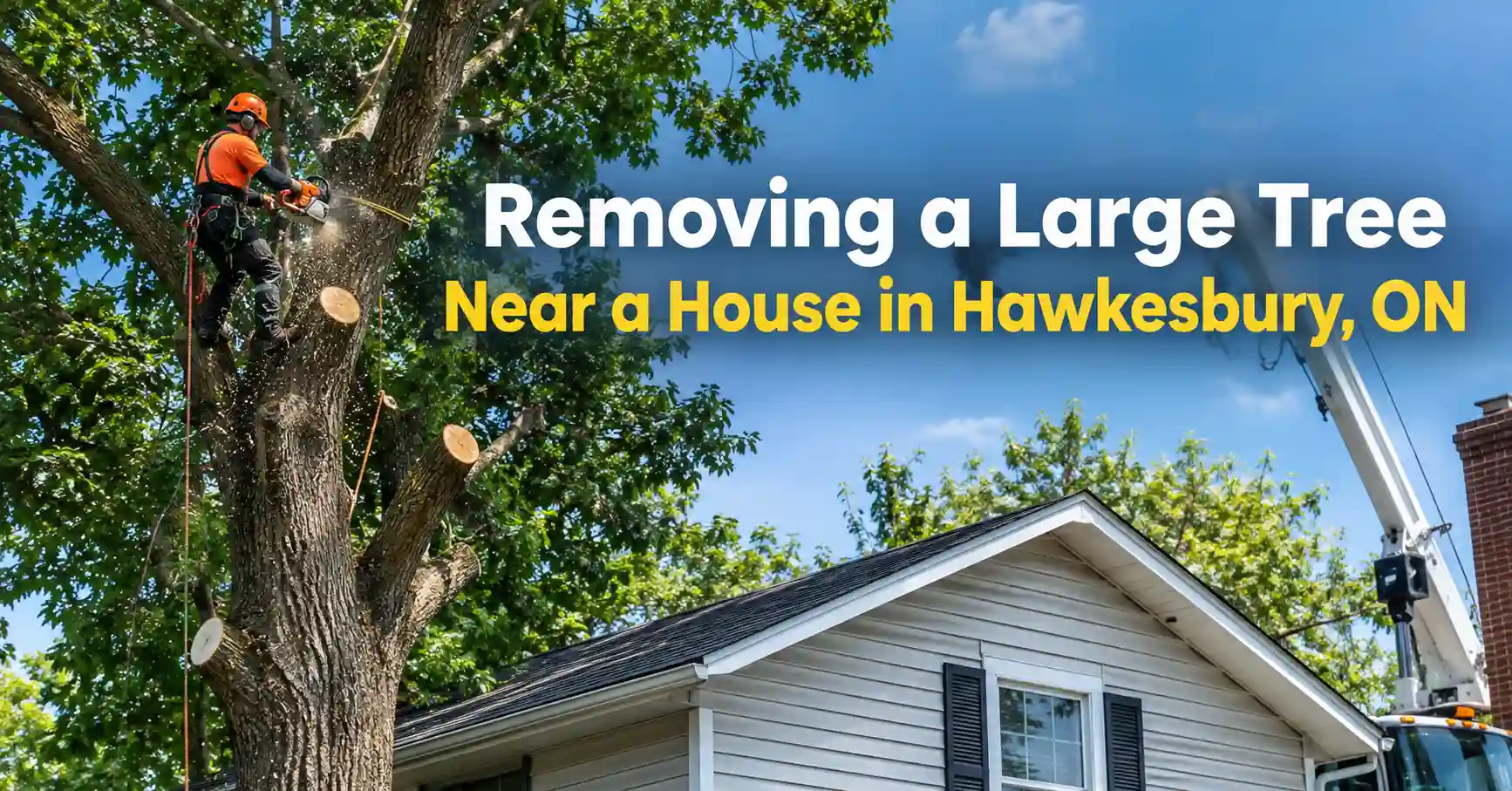
Large trees can make a property more attractive while providing shade, privacy, and natural beauty. However, when a large tree grows too close to a house, it can also create serious safety and property concerns.
Large branches may extend over the roof, roots can become damaged, and a weak tree may become dangerous during strong winds or storms. In some situations, professional tree removal in Hawkesbury may be the safest solution.
If you have a large tree growing close to your home, it is important to understand the risks and know when professional tree care may be necessary.
Why Can a Large Tree Near a House Be Dangerous?
A healthy tree near a house is not automatically a problem. Many trees can safely grow near homes for many years when they receive proper care.
The concern starts when the tree becomes too large for its location or develops structural problems.
A large tree near your home can potentially cause:
- Roof damage from falling branches
- Damage to gutters, siding, or windows
- Blocked driveways and walkways
- Damage to fences and outdoor structures
- Risks to vehicles
- Problems during severe weather
- Safety concerns for people on the property
The taller and heavier the tree, the greater the potential damage if a large branch or the entire tree falls.
Signs a Large Tree Near Your House May Need Removal
Not every large tree needs to be removed. However, some warning signs should not be ignored.
1. The Tree Is Leaning
A noticeable lean can be concerning, especially if the tree has recently changed position.
Look for signs such as:
- Exposed roots
- Soil lifting around the base
- Cracks in the trunk
- A sudden change in the tree's angle
- Damaged roots
A tree that has recently started leaning should be inspected by a qualified professional.
2. Large Dead Branches Are Over the Roof
Large branches hanging over a house can become dangerous if they are dead, damaged, or weak.
Strong winds, heavy snow, ice, and storms can cause branches to break unexpectedly.
Even when the main tree is healthy, removing dangerous branches through professional tree trimming can help reduce potential risks.
3. The Trunk Has Cracks or Decay
Visible cracks, cavities, soft areas, or decay can indicate structural problems.
Some trees can remain healthy despite minor defects. However, extensive decay may weaken the trunk and increase the chance of failure.
Because internal damage is not always visible, a professional assessment can help determine the condition of the tree.
4. The Roots Are Damaged
Roots help anchor a tree and keep it stable.
Construction, excavation, soil erosion, and other activities can damage important roots. When major roots are affected, the stability of a large tree may be reduced.
This can become especially concerning when the tree is located close to a house.
5. The Tree Is Dead or Dying
Dead trees can become dangerous, particularly when they are close to buildings or areas where people spend time.
Common signs of a dying tree include:
- Extensive dead branches
- Peeling bark
- Fungal growth
- Trunk decay
- Poor leaf growth
- Large areas of dead wood
If a tree is dead and poses a potential hazard, professional removal may be the safest option.
How Close Is Too Close to a House?
There is no single distance that automatically means a tree should be removed.
The level of risk depends on several factors, including:
- Tree height
- Tree species
- Tree health
- Trunk diameter
- Root condition
- Branch structure
- Distance from the building
- Tree lean
- Nearby power lines
- Surrounding structures
For example, a healthy small tree near a house may not create the same level of risk as a large, damaged tree standing beside the building.
The important question is not simply how close the tree is. It is whether the tree could cause serious damage if a branch or the entire tree were to fail.
When Is Tree Removal Better Than Tree Trimming?
Many homeowners wonder whether trimming can solve a tree problem.
Sometimes it can.
Professional tree trimming may be appropriate when a tree is healthy but has:
- Dead branches
- Overgrown limbs
- Branches touching the roof
- Poorly positioned branches
- Branches blocking access areas
However, trimming cannot solve every problem.
Tree removal may be more appropriate when a tree is:
- Dead
- Severely damaged
- Structurally unstable
- Seriously diseased
- Beyond recovery
- A significant threat to a home
A professional assessment can help determine whether trimming or removal is the better option.
What Happens During Large Tree Removal?
Removing a large tree beside a house requires careful planning.
A professional tree removal service usually follows several important steps.
Step 1: Tree Assessment
The tree and surrounding property are inspected before work begins.
Professionals may look at:
- Tree health
- Trunk condition
- Dead branches
- Structural defects
- Root condition
- Lean
- Nearby buildings
- Power lines
- Fences
- Vehicles
- Landscaping
This information helps determine the safest removal method.
Step 2: Create a Removal Plan
A large tree close to a house usually cannot simply be cut at the base and allowed to fall.
Instead, the tree may need to be removed in smaller sections.
This controlled approach helps reduce the chance of branches or trunk sections hitting the house or other structures.
Step 3: Remove the Branches
Large branches are carefully cut and controlled.
This is particularly important when branches extend over:
- Roofs
- Driveways
- Vehicles
- Fences
- Walkways
Professional equipment and proper techniques help control where branches are lowered.
Step 4: Remove the Trunk
Once the branches are removed, the trunk can be cut into manageable sections.
Depending on the size and location of the tree, professionals may use climbing equipment, ropes, rigging systems, or specialized machinery.
Step 5: Clean Up
After the tree has been removed, branches, logs, and other debris are cleared from the work area.
If the homeowner wants the remaining stump removed, stump grinding can also be considered.
Can You Remove a Large Tree Yourself?
DIY tree removal may appear to be a way to save money, but large trees near houses are particularly dangerous.
A homeowner may not be able to accurately predict:
- Where a branch will fall
- How heavy a branch is
- How the tree will react when cut
- Whether the trunk is structurally sound
- How wind will affect the tree
- How to safely use climbing equipment
One mistake could result in serious injury or expensive property damage.
For large trees near homes, hiring an experienced tree professional is generally a much safer approach.
What If the Tree Is Near Power Lines?
Extra caution is required when a tree is close to electrical lines.
Branches touching or growing close to power lines can create serious safety hazards.
Homeowners should never attempt to cut branches around electrical lines themselves.
If a large tree is close to both your house and power lines, a professional should assess the situation and determine the safest approach.
How Much Does Large Tree Removal Cost in Hawkesbury?
The cost of removing a large tree can vary significantly depending on the property and the tree itself.
Factors that may affect the price include:
- Tree height
- Trunk diameter
- Tree species
- Tree condition
- Location
- Accessibility
- Distance from the house
- Nearby power lines
- Required equipment
- Amount of debris
- Stump grinding
A large tree standing in an open yard may be easier to remove than a similar-sized tree located between a house, fence, and power line.
For this reason, an on-site assessment is often the best way to understand the work involved and the expected cost.
Why Professional Tree Removal Matters
Large tree removal requires more than a chainsaw. It involves planning, experience, safety equipment, and knowledge of tree structure.
A professional tree service can assess the condition of the tree and create a removal plan based on its size, location, and surrounding hazards.
For homeowners dealing with a large or hazardous tree, professional assistance can help reduce the risk of damage to the home and surrounding property.
Alexandria Tree & Landscape provides professional tree services for homeowners in Hawkesbury and surrounding areas.
Services include tree removal, tree trimming, arborist services, and stump grinding.
How Regular Tree Maintenance Can Prevent Problems
Not every tree problem requires complete removal.
Regular tree maintenance can help identify potential hazards before they become serious.
Professional tree care may include:
- Removing dead branches
- Pruning overgrown limbs
- Inspecting tree structure
- Identifying signs of decay
- Checking for damaged roots
- Assessing trees after severe weather
Taking care of potential problems early can sometimes prevent more expensive repairs or emergency tree work later.
What Should You Do If You Are Worried About a Large Tree?
If a large tree is close to your house and you are concerned about its condition, do not attempt to remove it yourself.
Instead, look for visible warning signs such as:
- Sudden leaning
- Large dead branches
- Cracks in the trunk
- Root damage
- Significant decay
- Storm damage
- Branches resting on the roof
If you notice one or more of these problems, consider arranging a professional tree assessment.
The tree may not need to be removed. In some cases, trimming, pruning, or other maintenance may be enough to reduce the risk.
Protect Your Home From Tree-Related Risks
A large tree can be a valuable part of your property, but its condition and location matter.
Trees that are damaged, unstable, diseased, or growing too close to important structures may create unnecessary risks.
Regular inspections and proper tree maintenance can help homeowners identify problems before they become emergencies.
If removal is necessary, professional tree care can help make the process safer and more controlled.
Final Thoughts
Removing a large tree near a house requires careful planning. The closer the tree is to a roof, driveway, power line, or other structure, the more important proper safety procedures become.
From the initial inspection to controlled cutting and cleanup, experienced professionals can help protect your property while dealing with a potentially hazardous tree.
If you have a large or dangerous tree on your Hawkesbury property, Alexandria Tree & Landscape can assess the situation and help you determine whether tree removal, trimming, or another solution is appropriate.
