How to Identify a Hazardous Tree Before It Falls in Cornwall, ON
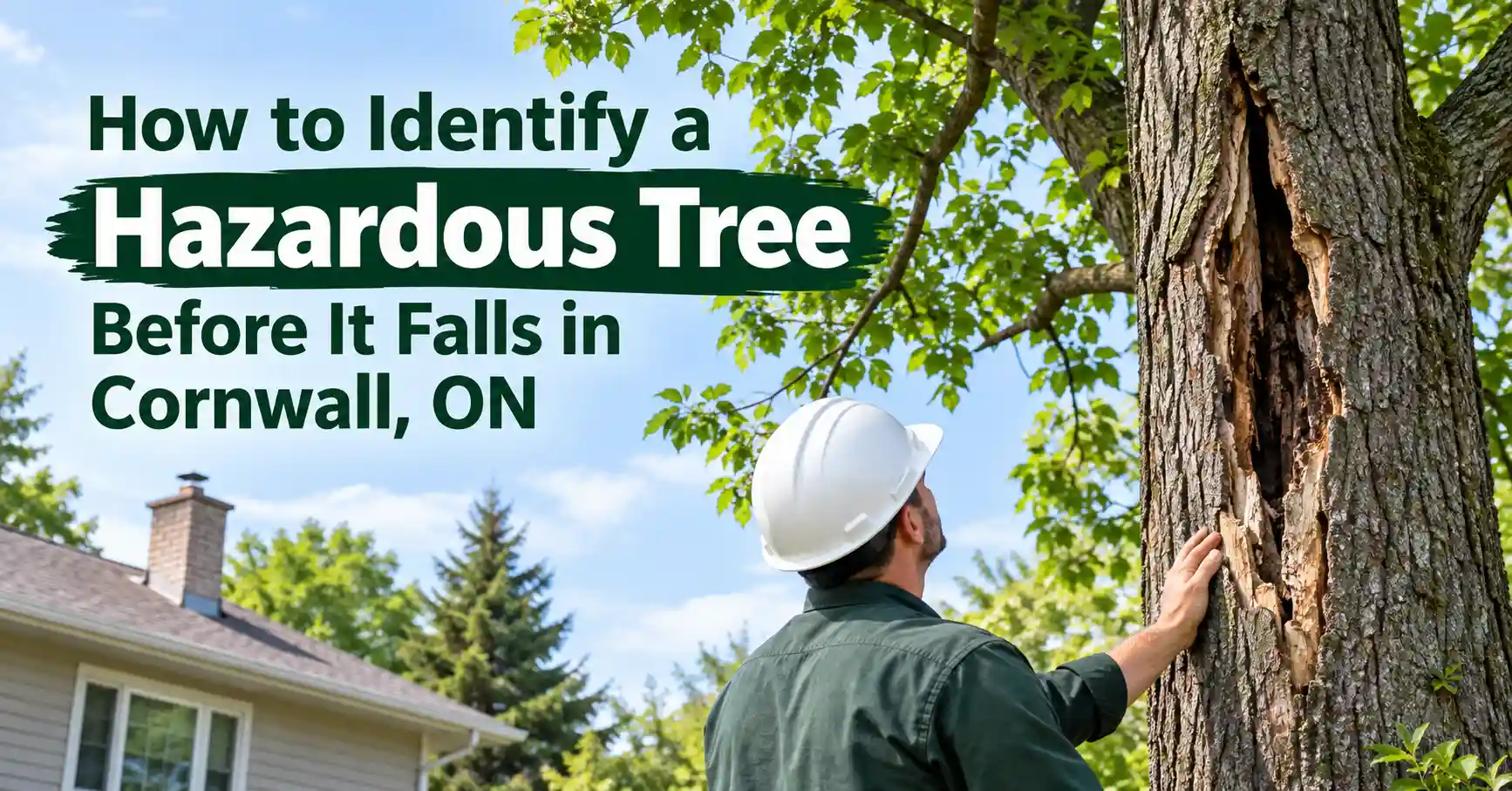
Trees are a beautiful part of many homes and properties in Cornwall, Ontario. They provide shade in the summer, add privacy, and make a yard feel more natural. But trees can also become a safety concern when they are damaged, diseased, or no longer structurally sound.
The difficult part is that a tree does not always look dangerous before it fails. A tree can still have green leaves while its roots, trunk, or large branches are weakened.
So, how can you tell if a tree on your Cornwall property may be hazardous?
There are several warning signs you can look for. If you notice something that does not look right, it is better to have the tree checked before a strong wind or winter storm turns a small concern into a much bigger problem.
What Is a Hazardous Tree?
A hazardous tree is basically a tree that could potentially fall or lose a large branch and cause injury or property damage.
This can happen because of age, disease, decay, storm damage, damaged roots, weak branches, or changes around the tree.
For homeowners in Cornwall, some of the most common warning signs include:
- Dead or broken branches
- Large cracks in the trunk
- A tree that has recently started leaning
- Exposed or damaged roots
- Hollow or decaying areas
- Mushrooms or fungal growth near the base
- Large branches with weak connections
- Broken branches after a storm
Seeing one of these signs does not automatically mean the tree needs to come down. It simply means the tree deserves closer attention.
Look Up and Check for Dead Branches
One of the easiest things to notice is dead wood in the canopy.
Large dead branches can become brittle over time. During high winds, heavy snow, or freezing rain, they may break and fall unexpectedly.
Take a look at the larger branches, especially those hanging over your house, driveway, garage, walkway, or places where your family spends time.
If you find a large dead or broken branch, professional tree trimming in Cornwall may be enough to remove the immediate risk and keep the rest of the tree healthy.
Pay Attention to Cracks in the Trunk
Take a close look at the main trunk. Deep cracks, splits, or large cavities can be signs that the tree has become weaker.
You should also look carefully where large branches join the trunk. If you see a significant crack or separation in one of these areas, it is worth getting professional advice.
Not every crack means a tree is going to fall tomorrow. Trees naturally develop some defects as they grow. The concern is whether the defect is affecting the tree's overall stability.
That is something an experienced arborist can assess more accurately.
Is the Tree Leaning?
A leaning tree is not necessarily a dangerous tree. Some trees simply grow at an angle because of how they developed.
The bigger concern is a new or changing lean.
For example, if a tree that was previously straight now appears to be leaning after a major storm, pay attention to what is happening around its base. You may see raised soil, exposed roots, or cracks in the ground.
A leaning tree that is moving toward your home, garage, driveway, or road should be taken seriously.
Check Around the Base of the Tree
The area around the base can tell you a lot about the condition of a tree.
Look for exposed roots, damaged roots, soil movement, erosion, or a noticeable change in the ground around the trunk.
Roots are what anchor the tree in the ground. If a large part of the root system has been damaged, the tree may become less stable, even if the branches and leaves still look healthy.
Construction and excavation can also damage roots. If work has recently been done around a mature tree, it is worth keeping an eye on its condition.
Watch for Signs of Decay
Decay is another reason a tree can become hazardous.
You might notice a hollow area in the trunk, soft wood, damaged bark, or fungal growth around the base. Sometimes there are very few obvious signs because decay can develop inside the tree.
This is one reason it can be difficult for a homeowner to judge a tree's condition just by looking at it.
If you are concerned about an older tree or notice several signs of decay, an arborist can take a closer look and help you understand the level of risk.
Do Not Ignore Hanging Branches After a Storm
Storms can change the condition of a tree very quickly.
After strong winds or heavy snow, walk around your property and look for broken or hanging branches. A branch that is still attached does not necessarily mean it is safe.
This is particularly important when a damaged branch is above your roof, vehicle, driveway, fence, or walkway.
If you see a large hanging branch, keep people away from the area and avoid trying to cut it down yourself. Removing large or unstable branches can be dangerous without the proper equipment and experience.
Look at Where Large Branches Meet the Trunk
Sometimes the problem is not the branch itself but the point where it connects to the trunk.
Large branches with weak or damaged unions can split under pressure. This can become a bigger concern during Cornwall's windy weather, winter conditions, or after a storm.
Regular pruning can sometimes help reduce the weight and stress on certain branches. However, the right approach depends on the tree and its condition.
Could Disease or Insects Be Weakening the Tree?
Tree health problems can also contribute to structural weakness.
Keep an eye out for unusual leaf loss, dead branch tips, holes in the bark, excessive dieback, damaged bark, or changes that seem unusual for the tree.
One symptom alone may not indicate a serious problem. But if you notice several changes at the same time, it is a good idea to have the tree inspected.
Early attention may give you more options for managing the tree instead of waiting until it becomes an emergency.
Trees Near Your Home Need Extra Attention
Think about what could happen if the tree actually fell.
A tree standing in an open part of your backyard may not create the same level of risk as a tree growing directly beside your house.
Trees close to homes, garages, driveways, roads, fences, and power lines deserve extra attention because a falling tree or large branch could cause significant damage.
If a tree is close to electrical lines, do not attempt to trim or remove it yourself. This type of work can be extremely dangerous and should be handled by properly qualified professionals.
What About a Tree Damaged by a Cornwall Storm?
After a major storm, it is tempting to start cleaning up right away. But take a moment to look around first.
Check for trees that have suddenly started leaning, large broken branches, uprooted trees, cracked trunks, or soil that has lifted around the roots.
If a tree is touching your home or another structure, stay away from the area until it can be assessed safely.
For serious storm damage, emergency tree service in Cornwall may be needed to remove an immediate hazard and prevent further damage.
Does a Hazardous Tree Always Need to Be Removed?
No.
This is an important point. A tree with a defect does not automatically need to be removed.
Depending on the situation, professional pruning, monitoring, or other tree care may be a better option. Tree removal is generally considered when the tree is severely damaged, unstable, extensively decayed, or presents a level of risk that cannot reasonably be managed.
A professional assessment can help you understand your options rather than making a decision based only on how the tree looks from the ground.
When Should You Call a Cornwall Arborist?
If something about a tree concerns you, it is better to ask before the problem gets worse.
You should consider a professional tree inspection if:
- The tree has developed a new lean
- Large branches are dead or broken
- You notice deep cracks in the trunk
- Roots appear damaged or exposed
- There are signs of significant decay
- The tree has suffered storm damage
- Large branches are hanging over your home
- You are unsure whether the tree is safe
An experienced arborist can look at the tree as a whole, including its branches, trunk, roots, health, and surroundings.
Professional Tree Services in Cornwall, Ontario
At Alexandria Tree & Landscape, we understand that homeowners do not always know whether a tree is simply showing its age or becoming a genuine safety concern.
Our tree services help property owners address concerns such as hazardous branches, tree trimming, storm damage, and tree removal. Every tree and property is different, so the right solution depends on the condition of the tree and what is around it.
If you have a tree on your Cornwall property that does not look right, getting it checked can give you peace of mind and help you make an informed decision.
Do Not Wait Until the Tree Falls
A hazardous tree does not always give you an obvious warning. Sometimes the signs are small, and sometimes the problem is hidden inside the trunk or below the ground.
Regularly checking the trees around your home, particularly after severe weather, can help you spot problems earlier.
If you notice a new lean, large dead branches, trunk cracks, root damage, or signs of decay, do not ignore it. Professional tree service in Cornwall, ON can help determine whether the tree needs trimming, monitoring, or removal.
Taking care of a potential problem before a tree falls is usually safer, easier, and less stressful than dealing with an emergency afterward.
