How Overgrown Trees Can Damage Your Cornwall Home
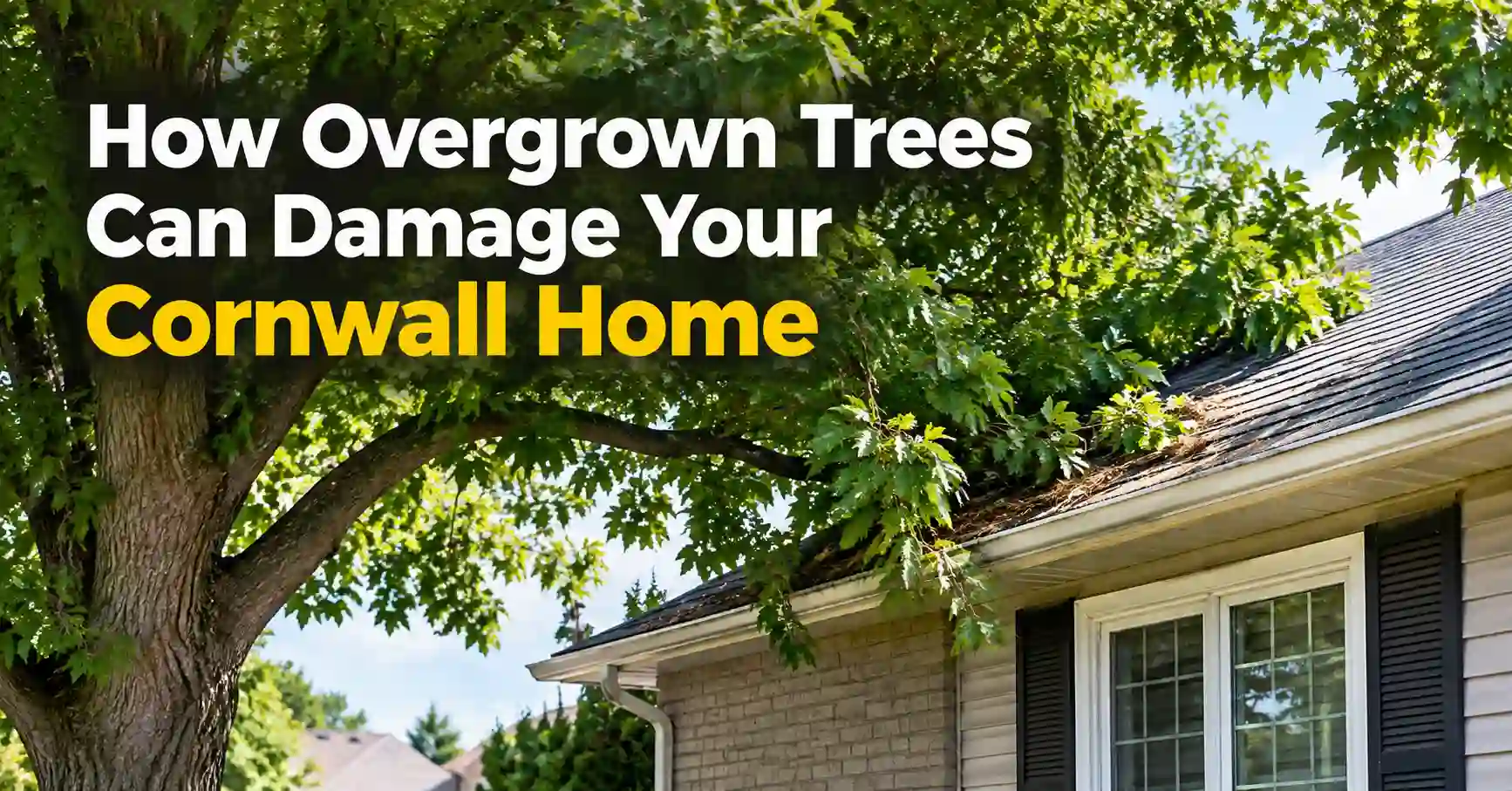
Trees add shade, privacy, beauty, and value to properties across Cornwall, Ontario. Mature trees can make a yard feel established and welcoming, but when growth becomes difficult to manage, an overgrown tree can also create risks for your home, roof, driveway, and surrounding property.
Branches that extend too close to a house, roots that spread toward structures, and dead or weakened limbs can become bigger problems if they are ignored. Regular tree inspections, trimming, and professional maintenance can help Cornwall homeowners identify these risks before they lead to expensive damage.
What Makes an Overgrown Tree a Risk?
An overgrown tree is not necessarily an unhealthy tree. However, when a tree grows without proper pruning or maintenance, its branches, roots, and overall structure may begin to interfere with nearby buildings and property.
Cornwall properties can have mature trees growing close to homes, garages, fences, driveways, and utility areas. As trees become larger, problems that were minor years ago can become significant.
Some common warning signs include:
- Branches touching or hanging over the roof
- Limbs growing close to windows or siding
- Dead, broken, or weak branches
- Roots lifting sections of a driveway or walkway
- Dense branches blocking gutters
- Trees leaning toward a house
- Branches interfering with utility lines
- Excessive growth around structures
Identifying these issues early can reduce the chance of costly repairs.
1. Overgrown Branches Can Damage Your Roof
One of the most common problems with trees growing too close to a home is contact with the roof.
Large branches can scrape against shingles during windy weather. Repeated movement may gradually wear down roofing materials and potentially create areas where moisture can enter. Heavy limbs can also fall onto the roof during storms, particularly when they are dead, cracked, or structurally weak.
Branches hanging directly over a roof can also drop leaves, twigs, and other debris. This material may accumulate around roof drainage areas and contribute to clogged gutters.
Professional tree trimming can help maintain appropriate clearance between branches and your home.
2. Trees Can Clog Gutters and Downspouts
Overgrown trees often create additional maintenance problems for homeowners.
When branches extend over a roof, leaves and small twigs can accumulate in gutters. Blocked gutters prevent rainwater from flowing away from the house properly. Water may then overflow near the roofline or around the foundation.
For Cornwall homeowners, keeping trees properly maintained can be one part of a broader property maintenance routine.
If you repeatedly clean your gutters because of excessive tree debris, it may be worth having the nearby trees professionally inspected.
3. Falling Branches Can Damage Your Property
Deadwood and weak branches are especially concerning when a tree is located close to a home.
A falling branch can damage:
- Roof shingles
- Siding
- Windows
- Decks
- Fences
- Vehicles
- Outdoor structures
The risk can increase during strong winds, heavy snowfall, ice accumulation, or severe storms.
Not every large branch is dangerous, but homeowners should avoid assuming that a branch is safe simply because it has remained in place for years. A professional tree assessment can help identify structural weaknesses that may not be obvious from ground level.
4. Overgrown Roots Can Affect Walkways and Driveways
Tree problems are not limited to branches.
As trees mature, their roots can extend through the surrounding soil. In some situations, roots may contribute to raised sections of walkways, patios, or driveways.
Uneven pavement creates both a maintenance issue and a potential tripping hazard. Roots can also make landscaping projects more difficult when they interfere with underground areas or hard surfaces.
Root-related problems should be assessed carefully. Cutting major roots without understanding the tree's structure can potentially weaken the tree or make it less stable.
5. Trees Growing Near Foundations Need Attention
A tree growing close to a house deserves regular observation.
Roots naturally seek moisture and suitable growing conditions. Depending on soil conditions, drainage, tree species, and the existing condition of a structure, roots may become a concern around foundations or other underground features.
It is important not to assume that every tree near a foundation will cause structural damage. However, homeowners should pay attention to changes such as:
- New cracks or movement around hard surfaces
- Significant root expansion
- Soil movement around the tree
- Drainage problems
- Tree growth directly against structures
A qualified tree professional can help determine whether the tree presents a meaningful property risk.
6. Overgrown Trees Can Damage Siding and Exterior Walls
Branches do not need to fall to cause damage.
When limbs repeatedly rub against siding, brick, trim, or other exterior surfaces, they can create scratches, wear, and other forms of damage. Wind makes this problem worse because branches may move back and forth against the building.
Trees growing against a house can also make it harder to inspect the exterior. Keeping appropriate clearance through professional pruning can help protect the structure while maintaining the health and appearance of the tree.
7. Dense Tree Growth Can Create Moisture Problems
Dense vegetation close to a home can reduce airflow around exterior surfaces.
When branches and foliage remain close to walls or roofs, moisture may remain trapped for longer after rain. Combined with poor drainage or inadequate sunlight, this can contribute to conditions that are less favorable for maintaining exterior materials.
Strategic pruning can improve clearance and airflow without unnecessarily removing large sections of the tree.
8. Overgrown Trees Can Interfere With Utility Lines
Trees growing near electrical or communication lines require particular caution.
Branches that reach utility lines can become a serious safety concern, especially during storms. Homeowners should never attempt to cut branches that are touching or growing around electrical lines themselves.
If a tree is close to utility infrastructure, professional assessment and the appropriate utility provider should be involved before any work is attempted.
9. Storm Damage Can Become More Serious With Poorly Maintained Trees
Cornwall experiences a range of seasonal weather conditions, and strong winds, snow, and ice can place additional stress on mature trees.
An overgrown tree with weak, dead, or poorly positioned branches may be more difficult to manage when severe weather arrives.
Regular pruning does not guarantee that a tree will never fail, but removing hazardous deadwood and addressing structural concerns can help reduce preventable risks.
Homeowners should inspect trees after major storms and look for hanging branches, cracks, split limbs, exposed roots, or sudden leaning.
10. Overgrown Trees Can Make Emergency Tree Removal More Complicated
When a hazardous tree is left unattended for too long, the eventual solution may become more complicated.
A tree that has grown into a roofline, utility area, fence, or other structure may require careful planning to remove safely. Limited access can also make tree removal more challenging.
Addressing tree problems while they are still manageable is often preferable to waiting until a damaged or unstable tree creates an emergency.
How Cornwall Homeowners Can Prevent Tree Damage
Preventive tree care can help homeowners identify problems before they become expensive property issues.
A practical maintenance routine can include:
Schedule Regular Tree Inspections
Have mature or problem trees inspected periodically, particularly when they are located close to your house, garage, driveway, or utility lines.
Trim Problematic Branches
Professional tree trimming can improve clearance around roofs, windows, buildings, and other structures while supporting healthy tree growth.
Remove Hazardous Deadwood
Dead or damaged branches should be evaluated and removed when necessary, especially when they are positioned above areas where people or property could be affected.
Monitor Trees After Severe Weather
Check trees after major storms for broken limbs, cracks, leaning, exposed roots, or other visible changes.
Avoid DIY Cutting of Large Limbs
Removing large branches without the right equipment or knowledge can create serious safety risks. Poor pruning can also damage the tree.
When Should You Call a Professional Tree Service?
Consider contacting a professional tree service if you notice a tree that:
- Has large dead or broken branches
- Is leaning toward your home
- Has branches touching the roof
- Is growing into utility lines
- Has visible cracks or split limbs
- Has exposed or significantly disturbed roots
- Has suffered storm damage
- Is becoming difficult to manage because of its size
Professional assessment is particularly important when a large tree is close to a home or another structure.
Protect Your Cornwall Home With Professional Tree Care
Trees are an important part of Cornwall's residential landscape, but mature trees require ongoing care when they grow close to buildings and other property features. Overgrown branches, hazardous limbs, excessive debris, root-related issues, and storm damage can all create potential problems when tree maintenance is neglected.
Alexandria Tree & Landscape provides professional tree services for homeowners and property owners in Cornwall, ON and surrounding communities. With experienced tree professionals, proper equipment, and a focus on safe tree work, the team can help identify and address tree-related risks before they become larger property concerns.
If you have a large or overgrown tree close to your Cornwall home, consider arranging a professional assessment before the next major storm or seasonal weather event. Early attention can help protect your property while keeping healthy trees an attractive part of your landscape.
