Common Tree Problems Homeowners Face in Cornwall, ON
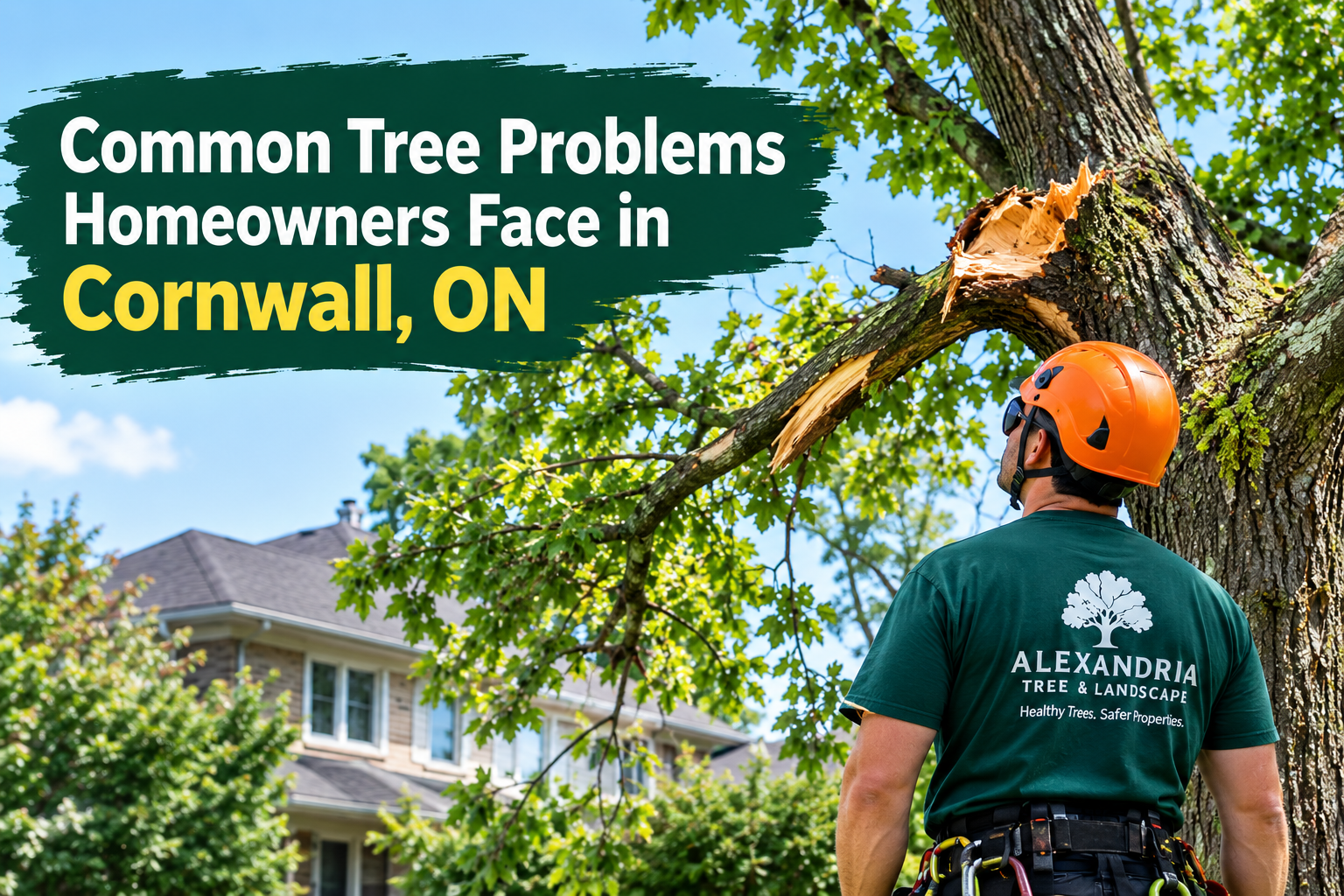
Trees are a valuable part of many homes in Cornwall, ON. They provide shade, privacy, seasonal beauty, and can make outdoor spaces more comfortable. But trees also require regular attention. Weather conditions, disease, insects, age, improper pruning, and root problems can gradually affect a tree's health and stability.
For Cornwall homeowners, recognizing early warning signs can make a significant difference. A small dead branch may be manageable with proper pruning, while a tree with serious structural damage may eventually become a hazard to your home or property.
Understanding the most common tree problems can help you know when routine maintenance is enough and when professional tree care is needed.
1. Storm-Damaged Trees
Cornwall properties can experience strong winds, heavy snow, ice, and severe weather throughout the year. These conditions can place considerable stress on mature trees.
After a storm, homeowners may notice:
- Broken or hanging branches
- Split limbs
- Cracks in the trunk
- Uprooted trees
- Exposed roots
- Newly leaning trees
- Damaged bark
Storm damage should not be ignored, especially when a damaged tree is close to a house, garage, driveway, fence, or power line.
A branch that remains attached but is partially broken can fall later without warning. Similarly, a tree with damaged roots may look stable but have reduced support.
If you notice significant storm damage, a professional assessment can help determine whether selective pruning, branch removal, or complete tree removal is the safest option.
2. Dead Branches and Weak Limbs
Dead branches are among the most common tree problems found around residential properties. A branch may die because of disease, insect damage, age, environmental stress, root problems, or physical injury.
Deadwood becomes increasingly brittle as it dries. During windy weather, these branches can break and fall onto areas where people, vehicles, or structures are located.
Not every tree with dead branches needs to be removed. In many cases, professional tree trimming and pruning can remove hazardous branches while preserving the healthy parts of the tree.
Homeowners should pay particular attention to large dead branches positioned over roofs, driveways, walkways, patios, or children's play areas.
3. Tree Disease
Disease can gradually weaken a tree without being immediately obvious. Some problems begin in the leaves or branches, while others affect the trunk or root system.
Potential signs of tree disease include:
- Unusual leaf discoloration
- Premature leaf drop
- Repeated branch dieback
- Bark abnormalities
- Fungal growth
- Weak new growth
- Cracks or decaying areas
- Sudden changes in the tree's appearance
The challenge is that similar symptoms can have different causes. Leaf damage, for example, could result from disease, insects, drought stress, root problems, or environmental conditions.
For this reason, homeowners should avoid assuming that a damaged tree automatically needs to be removed. A qualified arborist can assess the tree and help identify the underlying problem.
4. Insect Damage
Insects can affect trees in several ways. Some attack foliage, while others damage bark, branches, or the internal tissues of the tree.
Early signs may include small holes in the bark, unusual insect activity, thinning foliage, damaged leaves, or branches that gradually stop producing healthy growth.
When insect activity is combined with disease, drought stress, or structural damage, the tree may become increasingly vulnerable.
Regular observation can help homeowners spot changes early. If you notice unusual insect activity or unexplained decline, professional tree care can help determine what is happening before the damage becomes more extensive.
5. Overgrown Trees and Poor Pruning
Trees naturally become larger as they mature. Without appropriate maintenance, branches can eventually grow toward roofs, windows, driveways, fences, sidewalks, and other structures.
Overgrown branches may also create excessive canopy density. This can reduce airflow and sunlight within parts of the tree and make future maintenance more difficult.
However, pruning should not simply mean cutting as many branches as possible. Removing too much growth at once or making improper cuts can stress a tree and create opportunities for disease or decay.
Professional tree trimming in Cornwall can help maintain appropriate clearance while preserving the tree's natural structure and appearance.
6. Trees Growing Too Close to Buildings
A young tree planted a few feet from a house may not appear problematic at first. As the tree grows, however, its branches and trunk can eventually create conflicts with the property.
Branches may extend over a roof, touch siding, block windows, or interfere with gutters. Large trees can also become a concern when severe weather creates the possibility of falling branches.
The correct solution depends on the tree's species, size, health, location, and surrounding structures.
Sometimes pruning is enough to maintain safe clearance. In other cases, particularly when a tree is unhealthy or structurally compromised, removal may be considered.
7. Leaning or Unstable Trees
A leaning tree deserves attention, but a natural lean does not necessarily mean that a tree is dangerous.
The more important concern is a new or worsening lean.
Homeowners should look for additional warning signs such as:
- Cracked soil around the base
- Exposed or lifted roots
- Cracks in the trunk
- Large dead branches
- Split limbs
- Soil movement
- Recent storm damage
A tree leaning toward a home, road, driveway, or other high-traffic area may present a greater risk than one located in an open part of the property.
When the cause of the lean is uncertain, professional assessment is the safest approach.
8. Tree Root Problems
Roots play a critical role in supporting trees and supplying water and nutrients. However, roots can sometimes become a concern for homeowners.
Surface roots may interfere with lawns, gardens, landscaping, walkways, or other areas of a property. Trees located close to structures may also raise concerns about root growth.
One important point is that homeowners should not simply cut large roots to solve the problem. Major root removal can weaken the tree's stability and potentially create a greater hazard.
Before disturbing significant roots, have the tree and surrounding area professionally assessed. The right solution should consider both the property concern and the long-term health and stability of the tree.
9. Decay and Hollow Areas
Decay is another issue that can affect mature trees. A tree may develop cavities, soft wood, cracks, fungal growth, or other visible signs of deterioration.
A hollow section does not automatically mean the entire tree is unsafe. The location and extent of the decay, trunk structure, root condition, branch health, and surrounding environment all need to be considered.
Trees with significant decay near homes or areas used frequently by people deserve particular attention.
Professional tree assessment can help determine whether the tree can be maintained safely or whether removal should be considered.
10. Trees Near Power Lines
Trees growing near overhead power lines require extra caution. Branches can move into electrical lines during high winds, snow, or storms.
This is not a DIY pruning situation. Homeowners should never attempt to cut branches that are touching or dangerously close to electrical lines.
If you have a tree growing near a power line, contact the appropriate utility provider and a qualified professional to determine the safest way to address the problem.
11. Stump Problems After Tree Removal
Tree removal does not always end the problem. When a tree is cut down, the remaining stump can become an obstacle and may interfere with landscaping or future property improvements.
Old stumps can also attract insects and begin to decay over time. Depending on the location, homeowners may want the stump removed or ground below the surrounding surface.
Professional stump grinding can remove the visible portion of the stump and make the area easier to maintain or reuse.
How Seasonal Weather Can Affect Trees in Cornwall
Cornwall trees experience changing seasonal conditions that can affect their health and structural stability.
Winter snow and ice can add significant weight to branches. Strong winds can expose weak limbs. Spring weather can reveal damage that occurred during winter, while summer heat and dry conditions can place additional stress on trees.
This makes seasonal inspection particularly useful.
After major storms, homeowners should check for broken branches, damaged bark, leaning trees, and changes around the root zone. Regular observation can help identify problems before they become urgent.
When Should You Call a Tree Professional?
Some tree issues can be managed through routine maintenance, while others require professional attention.
You should consider contacting a tree professional if you notice:
- A tree that has suddenly started leaning
- Large dead or hanging branches
- Major storm damage
- Cracks in the trunk
- Extensive decay
- Exposed or damaged roots
- A tree growing into a structure
- Serious disease symptoms
- Trees close to power lines
- Large branches over roofs or driveways
The size and location of the tree are also important. A damaged branch in an open backyard may present less immediate risk than the same branch hanging above a house or driveway.
Tree Trimming vs Tree Removal
One of the most common questions homeowners have is whether a problem tree should be trimmed or completely removed.
Tree trimming may be appropriate when the tree is generally healthy but has dead, damaged, crossing, or overgrown branches. Proper pruning can improve clearance and help maintain the tree's structure.
Tree removal may become necessary when a tree is severely damaged, structurally unstable, extensively decayed, or located where it presents an unacceptable risk.
The decision should be based on the actual condition of the tree rather than simply its size or appearance.
A professional assessment can help homeowners understand whether preservation or removal is the more appropriate option.
Choosing Professional Tree Services in Cornwall, ON
When tree work involves large branches, mature trees, storm damage, or trees located close to buildings, safety should always be a priority.
Alexandria Tree & Landscape provides professional tree services in Cornwall, ON, for residential and commercial properties throughout Cornwall and the surrounding communities. The company has been serving customers since 2019 and is licensed and insured, with ISA- and IHSA-certified arborists supporting its tree care services.
Professional tree care can be especially valuable when homeowners are unsure about a tree’s health, stability, or long-term condition.
Rather than waiting until a damaged or unstable tree becomes an emergency, an early assessment can help you understand your options and plan the appropriate tree work safely and efficiently.
Protect Your Trees and Your Property
Trees can remain healthy and valuable parts of your Cornwall property for many years when they receive appropriate care. The key is recognizing potential problems before they become more serious.
Storm damage, dead branches, disease, insects, decay, root concerns, poor pruning, and structural instability are all issues worth monitoring. Regular inspection and professional tree care can help homeowners protect both healthy trees and the property around them.
If you have concerns about a tree on your Cornwall property, getting a professional assessment can help you determine whether the tree needs trimming, maintenance, monitoring, or removal.
Frequently Asked Questions About Tree Problems in Cornwall
What is the most common tree problem homeowners face?
Storm damage, dead branches, disease, insect damage, and overgrown branches are among the common concerns homeowners encounter. The exact problem depends on the tree species, age, location, weather exposure, and overall condition.
How can I tell if a tree is becoming dangerous?
Sudden leaning, large dead branches, trunk cracks, significant decay, exposed roots, split limbs, and storm damage can be warning signs. A professional inspection is recommended when a tree is close to a structure or frequently used area.
Can a diseased tree be saved?
Sometimes. The answer depends on the type and severity of the disease, the health of the tree, and whether the structural integrity has been affected. Early professional assessment may provide more options for managing the problem.
When does a tree need to be removed?
Removal may be considered when a tree is severely damaged, structurally unstable, extensively decayed, dead, or creating an unacceptable safety risk. A professional assessment can help determine whether removal is appropriate.
How often should trees be inspected?
There is no single schedule that applies to every tree. Mature, damaged, storm-exposed, or structurally questionable trees may benefit from more frequent professional assessment. Homeowners should also inspect their trees after major storms.
Should I cut tree roots that are growing above the ground?
Do not cut significant roots without professional advice. Large root cuts can affect tree stability and health. A professional can assess the root problem and recommend a safer solution.
Is tree trimming better than tree removal?
Neither is universally better. Trimming is often suitable for healthy trees with manageable branch problems, while removal may be necessary for trees with severe structural or health issues. The right option depends on the individual tree.
Final Thoughts
A healthy tree can be an important long-term asset for your Cornwall property, but ignoring visible warning signs can lead to larger problems. Regular observation, appropriate pruning, and timely professional assessment can help reduce unnecessary risks and support healthier trees.
Whether you are dealing with storm-damaged branches, an overgrown tree, disease, decay, root concerns, or a tree growing too close to your home, understanding the problem is the first step toward choosing the right solution.
For homeowners in Cornwall, ON, professional tree care can provide the knowledge and equipment needed to handle difficult tree problems safely and responsibly.
